|
|
|
|
|
|
Everything we see is made up of matter; it’s what gives things volume. Matter is comprised of three states: solids, liquids, and gases. Look at your desk at school. That’s a solid. The milk you drink for lunch? That’s a liquid. And helium—that invisible substance that fills birthday balloons—is a gas. This video helps young children begin to understand the three states of matter and their properties.
Found by Mrs Jefferies in Physics for Younger Learners
February 25, 2012 at 10:32 PM
Ages: 3 - 8
License: Public Domain
| Rating: |
|
Not Right For WatchKnowLearn
|
|
Views: 4776 |
|
|
| |
|
|
|
|
|
 |
A volcano is an opening, or rupture, in a planet's surface or crust, which allows hot, molten rock, ash, and gases to escape from below the surface. (03:06) This is a clip from a larger segment.
Found by teresahopson in Formation of Volcanoes
April 29, 2010 at 08:44 PM
Ages: 9 - 18
License: Proprietary
| Rating: |
|
Not Right For WatchKnowLearn
|
|
Views: 4406 |
|
|
| |
|
|
|
|
|
|
States of Matter. Learn about Solids, Liquids, Gases, Plasma and Phase Transition. A short educational video for 3rd and 4th grades. (05:29)
Found by moniquemonique in States of Matter
March 5, 2016 at 09:08 PM
Ages: 8 - 11
License: Undetermined
| Rating: |
|
Not Right For WatchKnowLearn
|
|
Views: 4274 |
|
|
| |
|
|
|
|
|
|
This short video gives basic facts about volcanoes. Key vocabulary words include core, magma, gases, and lava. This is a good resource to help build background knowledge and would work well as an introductory lesson to volcanoes and Earth. (03:25)
Found by MakeMeGenius in Overviews of Volcanoes
April 10, 2012 at 01:26 AM
Ages: 7 - 12
License: Undetermined
| Rating: |
|
Not Right For WatchKnowLearn
|
|
Views: 4181 |
|
|
| |
|
|
|
|
|
|
A look at the facts of Uranus. These facts include the number of moons, diameter of the planet, how long it takes to go around the sun, it is the coldest planet, and the temperature of the planet, where the blue color comes from, what gases it is composed of, its mass, the tilt of the planet, the atmosphere of the planet, and the rings around the planet. This video is set to music and there is no narration. (07:33)
Found by Barb in Uranus
July 26, 2009 at 03:34 PM
Ages: 9 - 16
License: Proprietary
| Rating: |
|
Not Right For WatchKnowLearn
|
|
Views: 4103 |
|
|
| |
|
|
|
|
|
|
This selection contains a teacher-created slideshow with narration. By watching this selection, students will learn about the arrangement of particles in solids, liquids, and gases; be shown examples of phase changes (boiling, freezing) and how they relate to energy, and will learn why evaporation occurs and why it is a cooling process. (12:24)
Found by Kamal101 in Particles
June 16, 2012 at 07:07 AM
Ages: 11 - 18
License: Undetermined
| Rating: |
|
Not Right For WatchKnowLearn
|
|
Views: 3934 |
|
|
| |
|
|
|
|
|
|
Oxygen forms about 21% of the air around us. In your body, oxygen forms a vital role in the production of energy in most cells. But if gases can only efficiently diffuse across tiny distances, how does oxygen reach the cells deep inside your body? Enda Butler tracks the surprisingly complex journey of oxygen through your body. Lesson by Enda Butler, animation by Compote Collective. (05:09)
Found by teresahopson in Respiratory System
May 2, 2017 at 06:01 PM
Ages: 9 - 18
License: Proprietary
| Rating: |
|
Not Right For WatchKnowLearn
|
|
Views: 3898 |
|
|
| |
|
|
|
|
|
|
This video produced by Teachers' Domain features Cathy Drennan, Professor of Chemistry and Biology at the Massachusetts Institute of Technology. Cathy explains that her research focuses on microorganisms that live off carbon dioxide, one of several greenhouse gases that are widely believed to accelerate global warming. Specifically, Cathy is investigating how a protein inside these microorganisms converts carbon dioxide into energy. Ultimately, Cathy hopes humans might apply what they learn from microorganisms to remove carbon dioxide from the environment. Closed-captioning included. (02:48)
Found by begamatt in Evolution of Microorganisms
October 12, 2010 at 08:12 PM
Ages: 14 - 18
License: Undetermined
| Rating: |
|
Not Right For WatchKnowLearn
|
|
Views: 3692 |
|
|
| |
|
|
|
|
|
|
In this interactive activity from ChemThink, learn about solids, liquids, and gases at an atomic level. Investigate how the behavior and interaction of atoms and molecules account for the states of matter. Important terms such as elements, molecules, compounds, and mixtures are also reviewed.
Found by Mrs Jefferies in Atomic Theory
May 18, 2012 at 11:03 PM
Ages: 13 - 18
License: Proprietary
| Rating: |
|
Not Right For WatchKnowLearn
|
|
Views: 3434 |
|
|
| |
|
|
|
|
|
|
Without the earth's atmosphere, life would not be possible. Many different gases make up the atmosphere in varying concentrations. Human actions are threatening the delicate balance of these gases. The earth's atmosphere is examined through theories of chemical evolution; ozone depletion and the greenhouse effect are explained.
Found by laneyk in Atmosphere
March 25, 2010 at 10:31 PM
Ages: 14 - 18
License: Undetermined
| Rating: |
|
Not Right For WatchKnowLearn
|
|
Views: 3411 |
|
|
| |
|
|
|
|
|
|
John Dabiri, bioengineer at Caltech, has developed new techniques for studying the motion of aquatic animals. In a recent study in the journal Nature, Dabiri and colleagues explain how swimming animals mix the ocean. Ocean mixing is important for the distribution of gases and nutrients throughout the sea, and can even affect global climate. (3min)
Found by Mrs Jefferies in Cnidaria (Jellyfish and Anemone)
December 28, 2011 at 10:19 AM
Ages: 11 - 18
License: Proprietary
| Rating: |
|
Not Right For WatchKnowLearn
|
|
Views: 3308 |
|
|
| |
|
|
|
|
|
|
We take a look at the basic composition of blood. Blood is composed of liquids and solids. The solids are called the formed elements while the liquid portion is called plasma. The solids of the blood consists of red blood cells, white blood cells and platelets . The plasma is mostly water, but it does contain some plasma proteins, dissolved gases, nutrients and electrolytes. This is
Lesson 2 in our Cardiovascular System (Blood) series. This is part of our Anatomy and Physiology lecture series. (04:18)
Found by MrFordsClass in Blood & Lymph
October 5, 2014 at 01:09 PM
Ages: 13 - 18
License: Proprietary
| Rating: |
|
Not Right For WatchKnowLearn
|
|
Views: 3045 |
|
|
| |
|
|
|
|
|
|
Carbon nanotubes offer a powerful new way to detect harmful gases in the environment. However, the methods typically used to build carbon
nanotube sensors are hazardous and not suited for large-scale
production. A new fabrication method created by MIT chemists — as simple as drawing a line on a sheet of paper — may overcome that obstacle. MIT postdoc Katherine Mirica has designed a new type of pencil lead in which graphite is replaced with a compressed powder of carbon nanotubes. The lead, which can be used with a regular mechanical pencil, can inscribe sensors on any paper surface. The sensor, described in the journal Angewandte Chemie, detects minute amounts of ammonia gas, an industrial hazard. Timothy Swager, the John D. MacArthur Professor of Chemistry and leader of the research team, says the sensors could be adapted to detect nearly any type of gas. (02:30)
Found by Rockefellerteacher in Chemical Engineering
December 11, 2012 at 11:41 AM
Ages: 16 - 18
License: Undetermined
| Rating: |
|
Not Right For WatchKnowLearn
|
|
Views: 2879 |
|
|
| |
|
|
|
|
|
|
John J. McCarthy Observatory, New Milford, CT. Monthly astronomy lecture done by Bob Lambert. Date of lecture is October 2008. Lecture starts with explanation that we are now living in the Earth’s Secondary Atmosphere. There was a First Atmosphere called the primary atmosphere and it did not resemble today’s atmosphere at all. The evolution of our atmosphere is a continuum of an evolution, the atmosphere continues to change. The presenter discusses the gases that were contained in the first atmosphere and gases that are contained in the atmosphere today. Then video discusses why it is important to study our atmosphere. Presenter stands beside a screen that is a Power Point presentation. Video is of good quality and would be appropriate for late elementary students through high school students. (09:34)
Found by Barb in Nebulae
August 23, 2009 at 05:07 AM
Ages: 14 - 18
License: Proprietary
| Rating: |
|
Not Right For WatchKnowLearn
|
|
Views: 2877 |
|
|
| |
|
|
|
|
|
|
To observe how winds move high in Earth's atmosphere, scientists sometimes release clouds of barium as tracers to track how the material corkscrews and sweeps around, but scientists have no similar technique to study the turbulent atmosphere of the sun. So researchers were excited in December 2011, when Comet Lovejoy swept right through the sun's corona with its long tail streaming behind it. NASA's Solar Dynamics Observatory (SDO) captured images of the comet, showing how its long tail was buffeted by systems around the sun, offering scientists a unique way of observing movement as if they'd orchestrated the experiment themselves. Since comet tails have ionized gases, they are also affected by the sun's magnetic field, and can act as tracers of the complex magnetic system higher up in the atmosphere. Comets can also aid in the study of coronal mass ejections and the solar wind. (03:35)
Found by teresahopson in Comets
December 11, 2012 at 06:01 PM
Ages: 12 - 18
License: Public Domain
| Rating: |
|
Not Right For WatchKnowLearn
|
|
Views: 2874 |
|
|
| |
|
|
|
|
|
|
Gluten holds the gases produced when dough rises, and provides the structure of a loaf once it is baked. But first, gluten’s stretchy consistency must be developed through mixing and kneading.
Found by Mrs Jefferies in Nutrition
July 18, 2012 at 07:46 PM
Ages: 4 - 8
License: Public Domain
| Rating: |
|
Not Right For WatchKnowLearn
|
|
Views: 2582 |
|
|
| |
|
|
|
|
|
|
Matter is examined in its three principal states--gases, liquids, and solids-- relating the visible world to the submicroscopic. Matter is transformed into different states through various means which are demonstrated with a variety of examples. Real life applications of these transformations are explained. (03:35)
Found by laneyk in Phases of Matter
March 25, 2010 at 10:10 PM
Ages: 10 - 18
License: Undetermined
| Rating: |
|
Not Right For WatchKnowLearn
|
|
Views: 2556 |
|
|
| |
|
|
|
|
|
|
Video technology and science converge on an active volcano in Vanuatu, where explorer Sam Cossman operated camera-mounted drones to capture high-definition images of the spectacular yet dangerous Marum Crater. Cossman and his team piloted the drones over the 7.5-mile-wide (12-kilometer) caldera while confronting toxic gases and boiling lava. Although two drones succumbed to the harsh environment, the team was able to bring back video and photos that will help scientists learn more about the volcano and the life around it. (03:29)
Found by teresahopson in Overviews of Volcanoes
October 22, 2016 at 08:26 AM
Ages: 10 - 18
License: Proprietary
| Rating: |
|
Not Right For WatchKnowLearn
|
|
Views: 2530 |
|
|
| |
|
|
|
|
|
|
Telescopes are engineered to detect a specific range of wavelengths of electromagnetic radiation. Images from a variety of these telescopes show different aspects of the same astronomical objects. To trained eyes, each of the images in this collection produced for Teachers' Domain contributes details that provide a more comprehensive understanding of the observed object than is possible from a single image. Radio images highlight the presence of cooler gas clouds (especially hydrogen), infrared images show areas of low-energy heat, visible light images depict primarily gases and dust, and x-ray images reveal high-energy heat emissions.
Found by Mrs Jefferies in Visible Light
April 25, 2012 at 08:18 PM
Ages: 10 - 18
License: Proprietary
| Rating: |
|
Not Right For WatchKnowLearn
|
|
Views: 2447 |
|
|
| |
|
|
|
|
|
|
Ben Edwards, a renowned volcanologist and Professor of Earth Sciences at Dickinson College, explains the potential hazards of gases emitted from the Hawaiian volcanoes. (02:31)
Found by oneiljos in Hawaiian Volcanoes
May 9, 2018 at 08:24 AM
Ages: 9 - 18
License: Educational Community License
| Rating: |
|
Not Right For WatchKnowLearn
|
|
Views: 2410 |
|
|
| |
|
|
|
|
|
|
Salman Khan offers his intuition of how gases generate pressure in a container and why pressure x volume is proportional to the combined kinetic energy of the molecules in the volume. This video, which is suitable for high school students, starts with a black screen because the instructor, in his conversational tone, uses it as a 'chalkboard.' Instructor uses different colors for clarification. (09:49)
Found by teresahopson in Thermodynamics
August 14, 2009 at 05:52 PM
Ages: 14 - 18
License: CC by-nc-nd
| Rating: |
|
Not Right For WatchKnowLearn
|
|
Views: 2335 |
|
|
| |
|
|
|
|
|
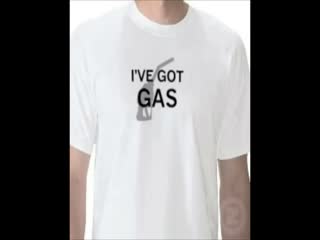 |
This is a video that was done by a few young gentlemen to describe the 3 states of matter. They sing about solids, liquids, and gases and also state the definition of each. It's silly, but I think engaging for students. The gentlemen sang into a synthesizer. NOTE: the photos of gasoline used while singing about gas could be confusing for some students since gasoline is a liquid. (02:22)
Found by jbb1234567 in Phases of Matter
November 20, 2012 at 12:55 PM
Ages: 12 - 14
License: Undetermined
| Rating: |
|
Not Right For WatchKnowLearn
|
|
Views: 1888 |
|
|
| |
|
|
|
|
|
|
This student created video provides basic definitions of the three states of matter: solids, liquids, and gases. Examples of each are shown along with characteristics of each. ( 1:36)
Found by michellehoggard in Phases of Matter
September 19, 2011 at 08:40 PM
Ages: 9 - 12
License: Undetermined
| Rating: |
|
Not Right For WatchKnowLearn
|
|
Views: 1837 |
|
|
| |
|
|
|
|
|
|
Instructor focuses on the properties of alkali, alkaline earth, and transition metals. Also discusses halogens and noble gases. Instructor uses his computer screen and different colors to educate students. High school course in chemistry.
Found by teresahopson in Periodic Table
October 4, 2009 at 03:45 PM
Ages: 12 - 18
License: Undetermined
| Rating: |
|
Not Right For WatchKnowLearn
|
|
Views: 1719 |
|
|
| |
|
|
|
|
|
|
Molar volume is an important concept when dealing with gases in reactions. This video will help you understand and apply Avagadro's Principle (04:01).
Found by tyler.arnold in Gas Laws
October 16, 2012 at 09:42 PM
Ages: 15 - 18
License: Public Domain
| Rating: |
|
Not Right For WatchKnowLearn
|
|
Views: 1635 |
|
|
| |
|
|